
iRacing Season 3 2026: New Cars, a Rebuilt Laguna Seca, and the Features Endurance Racers Have Been Waiting For
iRacing's Season 3 2026 build is arriving in early June, and this one is different. This isn't a minor patch with a couple of paint scheme updates and a bug fix list — it's one of the most feature-rich quarterly updates the platform has delivered in recent memory. A from-scratch rebuild of Laguna Seca, four new cars including the BMW M2 Racing and Euro NASCAR RC01, the long-awaited arrival of Dirt AI, built-in fuel calculators, dynamic track maps, overhauled multi-class starts, and infrastructure upgrades that will reduce latency across the board. For anyone running a professional-grade simulator — and especially for endurance racers — this build has something meaningful in almost every category.
Here at Rocky Sim Racing, our 12-driver e-sports team has been competing in iRacing endurance events all year, including a first-place finish at the Sebring 12 Hours (GTP) and a win at the Daytona 500 (NASCAR) in 2026 alone. We've been watching this development update closely because many of these changes will directly impact how we prepare, race, and train on our custom simulators. Let's break down what matters.
Laguna Seca: Rebuilt From the Ground Up
If there's one announcement that has the sim racing community buzzing, it's the complete rebuild of WeatherTech Raceway Laguna Seca. The original version has been part of iRacing since 2008, and while it has received visual refreshes over the years, the underlying surface data and elevation model were nearly two decades old. That changes with Season 3.
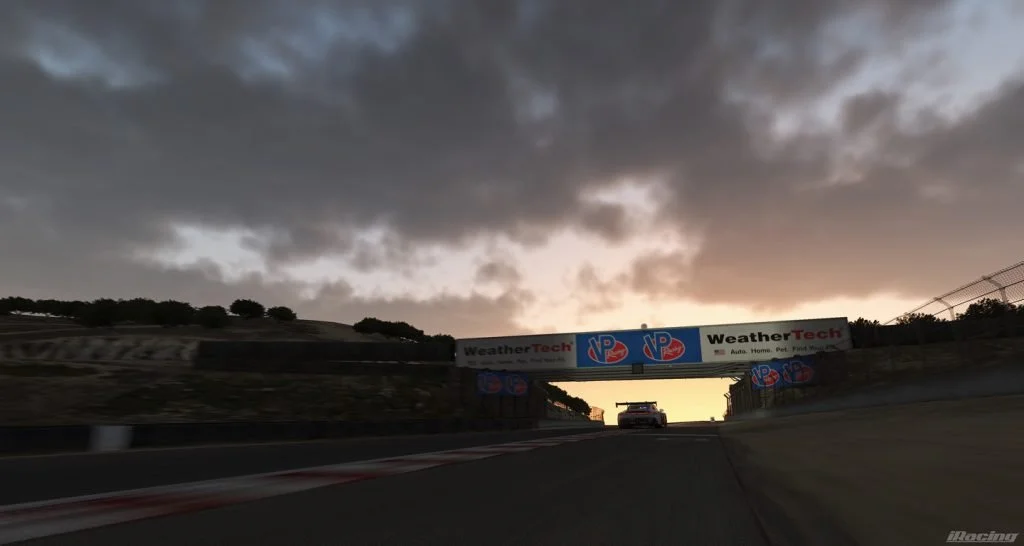
iRacing has rescanned the entire circuit using modern laser scanning and photogrammetry technology, creating a brand-new track from scratch. The result delivers a more accurate racing surface, updated elevation changes through the iconic Corkscrew, improved visuals, and — critically for anyone chasing realistic lap times — a significantly more faithful representation of the real track's grip characteristics and surface irregularities.
The rebuilt version ships as a separate track variation and will be automatically granted to all iRacers who purchased the circuit. This is particularly significant for sim racers who use iRacing as a training tool alongside real-world track days. When we build custom force-feedback profiles at Rocky Sim Racing — tuned from driving actual customer cars like the Porsche 992 GT3 or Corvette C7 — the accuracy of the virtual track surface directly impacts how realistic those profiles feel. A properly scanned Laguna Seca means better data for everyone building high-fidelity setups.
New Cars: BMW M2 Racing, Euro NASCAR, and More
Season 3 introduces four new vehicles, each targeting a different segment of the iRacing community.
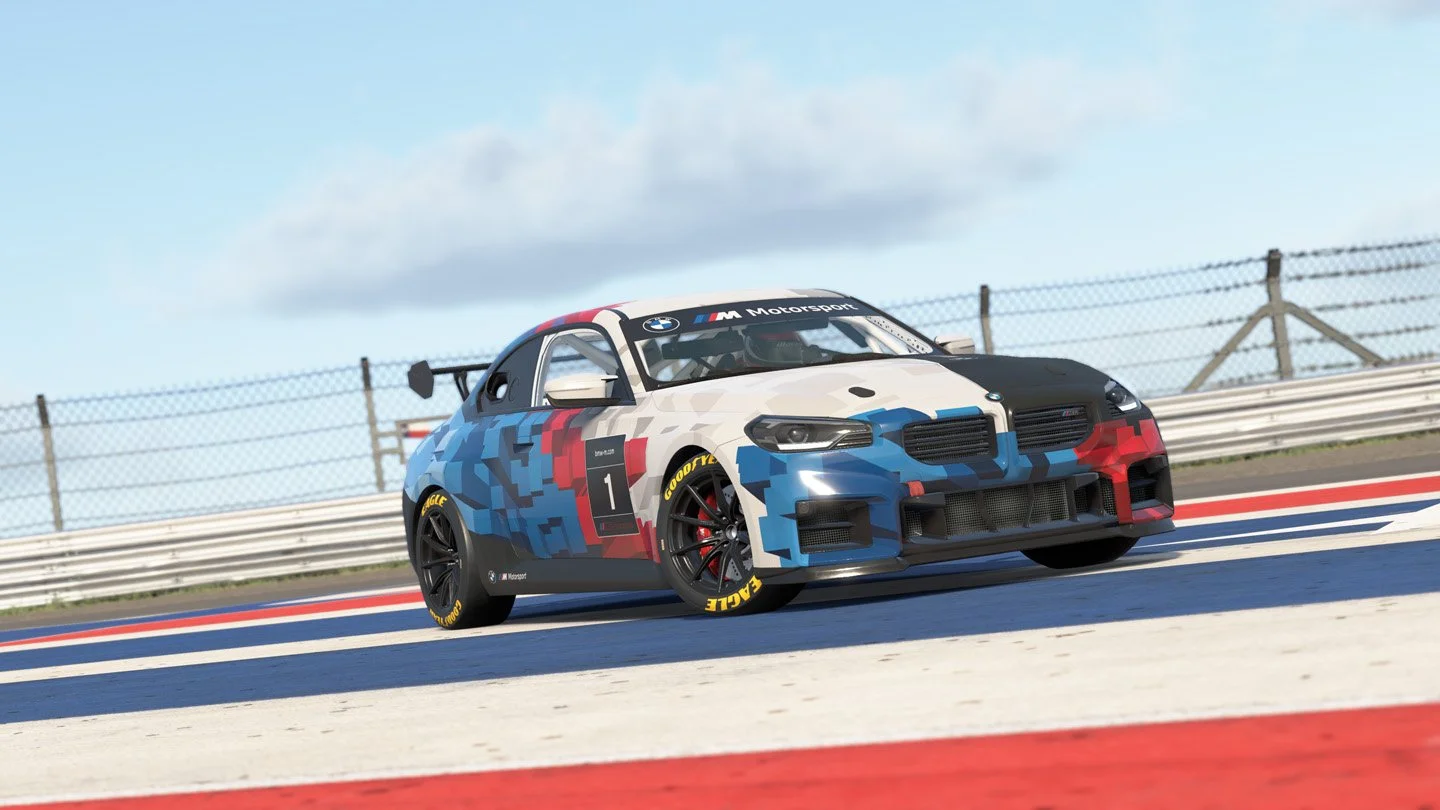
The BMW M2 Racing is the headliner for road racing newcomers. The G87-generation machine replaces the previous BMW M2 CS Racing in the official M2 series and arrives as free base content for all iRacing members. It features a completely updated visual model with a new cockpit display system, and it's a more streamlined, modern-looking car than its predecessor. The older M2 CS Racing will remain available for AI racing and hosted sessions.
The Euro NASCAR RC01 brings the European NASCAR series to iRacing for the first time. Powered by a naturally aspirated V8 engine and designed specifically for road racing, the RC01 promises a raw, unassisted driving experience — no traction control, no ABS, just driver and machine. It's the kind of car that rewards precision and punishes laziness, exactly the type of vehicle that benefits from a high-fidelity simulator with strong force feedback and a responsive motion platform.
Formula Vee is expanding with two new variants offered as optional purchases, while the original free Formula Vee remains unchanged. And prototype fans get a free upgrade to the BMW M Hybrid V8 Evo, bringing the GTP contender in line with its current real-world specification. For our team, which competes regularly in GTP endurance events, the Evo update means our practice and race preparation will more accurately reflect the car's real-world balance and behavior — a meaningful advantage when you're pushing through a 12-hour stint.
Dirt AI Finally Arrives
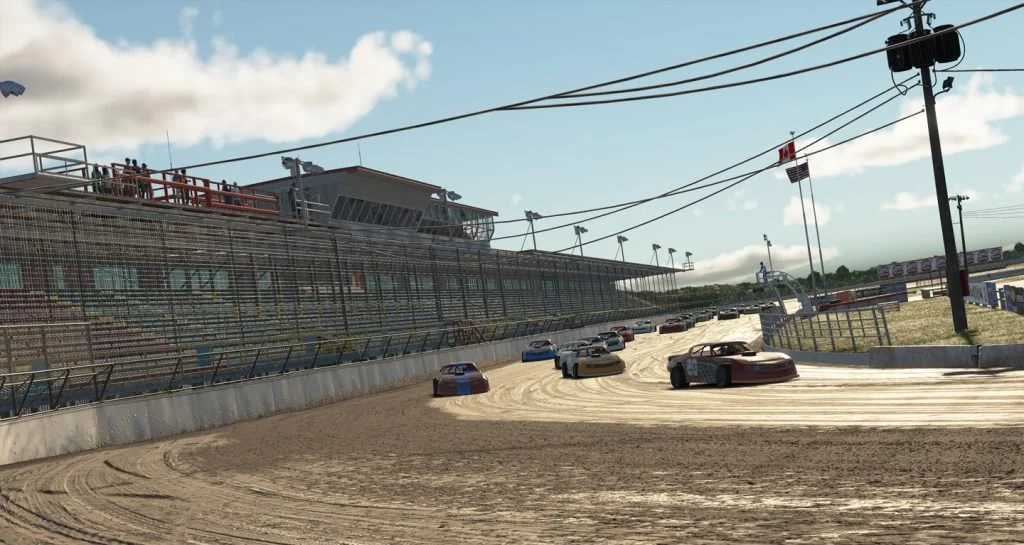
One of the most requested features in iRacing's history has been AI opponents for Dirt content, and Season 3 finally delivers. Dirt Oval AI launches with the Dirt Legends Ford '34 Coupe and Dirt Street Stock, with additional content planned for future builds. AI Heat Racing also debuts alongside the feature, expanding single-player race weekend formats.
While Dirt isn't Rocky Sim Racing's primary focus, it's a significant milestone for the platform's overall depth. For sim racing enthusiasts who want to explore different disciplines on their custom rig — something our systems are absolutely capable of — this opens up an entirely new single-player experience without needing to wait for a populated online lobby.
Built-In Fuel Calculator: A Game-Changer for Endurance Strategy
For years, serious iRacing competitors have relied on third-party tools like Kapps, iRacing Live Timing, or custom spreadsheets to manage fuel strategy. Season 3 brings a fully integrated fuel calculator directly into the simulator.
The new tool provides live strategy information including average fuel consumption, minimum and maximum consumption tracking, laps remaining, fuel required to finish the race, and — most importantly — the optimal pit stop window showing the first and last recommended lap for refueling. It supports both solo and team racing, and because it's built into the sim engine rather than running as an overlay, it carries zero additional performance overhead.
For our endurance team, this is a significant quality-of-life improvement. During a 12-hour event, fuel strategy decisions happen under pressure and in real time. Having that data integrated natively rather than split across multiple screens or applications simplifies the driver's workflow, which is especially valuable when you're managing fatigue in the later hours of a race. On a professional simulator with triple monitors or a curved ultrawide — like the Samsung 49" curved displays in our White Simulator builds or the triple 45" LG OLED UltraGear panels in the Darkest Simulator — keeping critical information within the sim environment instead of on a separate tablet or phone is a meaningful ergonomic gain.
Dynamic Track Maps: No More Third-Party Overlays
Season 3 also introduces live dynamic track maps with real-time positional data, another feature that previously required external software. Drivers can choose between four layout options: a traditional aerial track map, a radial map showing time gaps around the circuit, a linear map resembling a race progress bar, and a rotating mini-map for orientation on longer circuits.
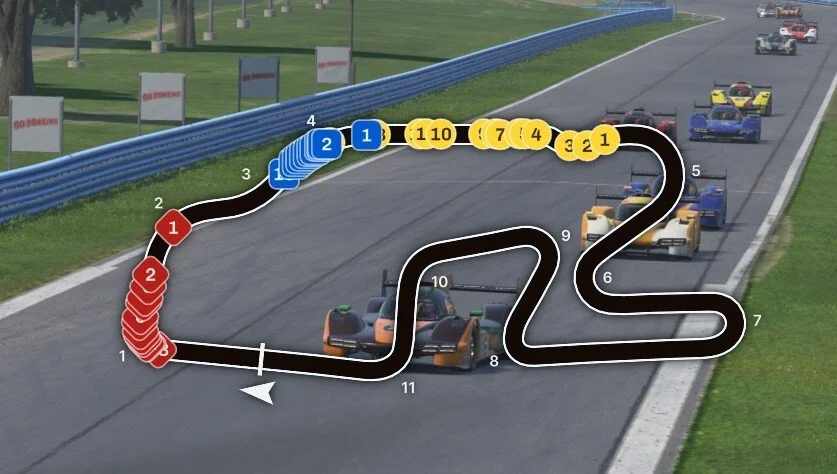
Like the fuel calculator, these maps are integrated directly into the sim engine and built on new networking technology specifically designed to minimize performance impact. For triple-monitor setups where every frame matters, eliminating a third-party overlay in favor of a native solution is a welcome trade.
Multi-Class Starts Get a Real-World Overhaul
This one matters enormously for endurance racers. iRacing has redesigned multi-class race control to introduce individual pace cars and independent green flags for each class. Previously, multi-class starts could be chaotic — slower GT3 cars and faster GTP prototypes receiving the green flag simultaneously and in close proximity, creating unnecessary first-lap incidents.
The new system brings the start procedure much closer to real-world endurance racing formats like those used at the 24 Hours of Le Mans or the IMSA WeatherTech SportsCar Championship. Each class gets its own formation phase and its own green flag, reducing the chaos and creating cleaner, more realistic race starts. While iRacing hasn't confirmed whether this will be fully active for Season 3 or tested during Week 13, the fact that it's nearing completion is excellent news for the endurance community.
Control Profiles: Swap Hardware Without the Headache
Players who frequently switch between steering wheels or control setups — which is common on a professional simulator where you might swap between a round GSI wheel for GT racing and a formula-style Bavarian SimTec rim for open-wheel events — will benefit from the new Control Profiles system. Instead of manually managing configuration files and copying folders, users can save, load, and switch between hardware profiles directly through the UI.
It sounds basic, but anyone who has dealt with iRacing's control configuration knows how clunky the old process was. For our customers who invest in multiple wheel rims as part of their custom simulator builds, this is a practical improvement that reduces friction every time they want to switch disciplines.
Infrastructure Upgrades and Pit Road Improvements
Under the hood, iRacing has implemented Anycast routing technology across its race server network. The result should be lower latency, reduced packet loss, improved connection stability, and better resilience against network disruptions. For competitive sim racers where milliseconds matter, cleaner connections translate directly into more consistent inputs and fewer lag-related incidents.
Pit road enforcement has also been overhauled with a new PID controller system that automatically manages pit speed, reducing the need for manual speed management and making pit stops more consistent and predictable.
What's Coming Next: Career Mode and the Spark Graphics Engine
Looking beyond Season 3, iRacing shared updates on two major long-term projects. The upcoming Career Mode will offer a single-player progression system across multiple racing disciplines, built separately from the multiplayer infrastructure. And the Spark graphics engine — iRacing's next-generation rendering technology — has its first architectural phase nearing completion, with significant gains in both visual quality and performance expected. The development team has added lighting specialists to the art team, targeting precisely the area where the simulator has had the most room for improvement.
Both projects are still in development, but they signal that iRacing is investing heavily in the platform's future. For anyone building a premium sim racing setup today, it's reassuring to know that the software ecosystem is evolving to match the hardware.
What This Means for Rocky Sim Racing Customers
Every major iRacing update reinforces why we build our simulators the way we do. Features like the dynamic track maps and fuel calculator are designed to be used during intense racing — they need to be readable at a glance on a high-quality display, whether that's the curved 49" Samsung in our White Simulator or the triple 45" OLED panels in the Darkest Simulator. The multi-class start improvements will be felt directly through a D-Box G5 motion platform with Traction Loss as each class accelerates independently. And a properly rescanned Laguna Seca, running through a 20NM or 25NM direct drive wheel base from Simucube, delivers the kind of surface detail that justifies the investment in professional-grade force feedback.
Our team will be putting all of this through its paces as soon as the Season 3 build drops. If you're curious about how these updates feel on a purpose-built racing simulator — or if you're thinking about what a custom system could do for your own sim racing or real-world track preparation — we'd love to talk.
Book a free consultation at rockysimracing.ca/book-a-consult and let's build something fast.
