
Simucube 3 Ultimate Arrives June 16: 35Nm of Next-Gen Force Feedback
The wait is nearly over. Simucube has confirmed that its flagship third-generation wheel base, the Simucube 3 Ultimate, begins shipping on June 16, 2026. Packing 35Nm of peak torque from an entirely new motor architecture, the Ultimate completes a lineup that already includes the 15Nm Sport and 25Nm Pro — and raises the bar for what direct drive force feedback can deliver to serious sim racers.
For anyone building or upgrading a professional-grade racing simulator, this is the most significant hardware launch of the year so far. Here is everything we know, why it matters, and how it fits into the kind of high-fidelity systems we build at Rocky Sim Racing.
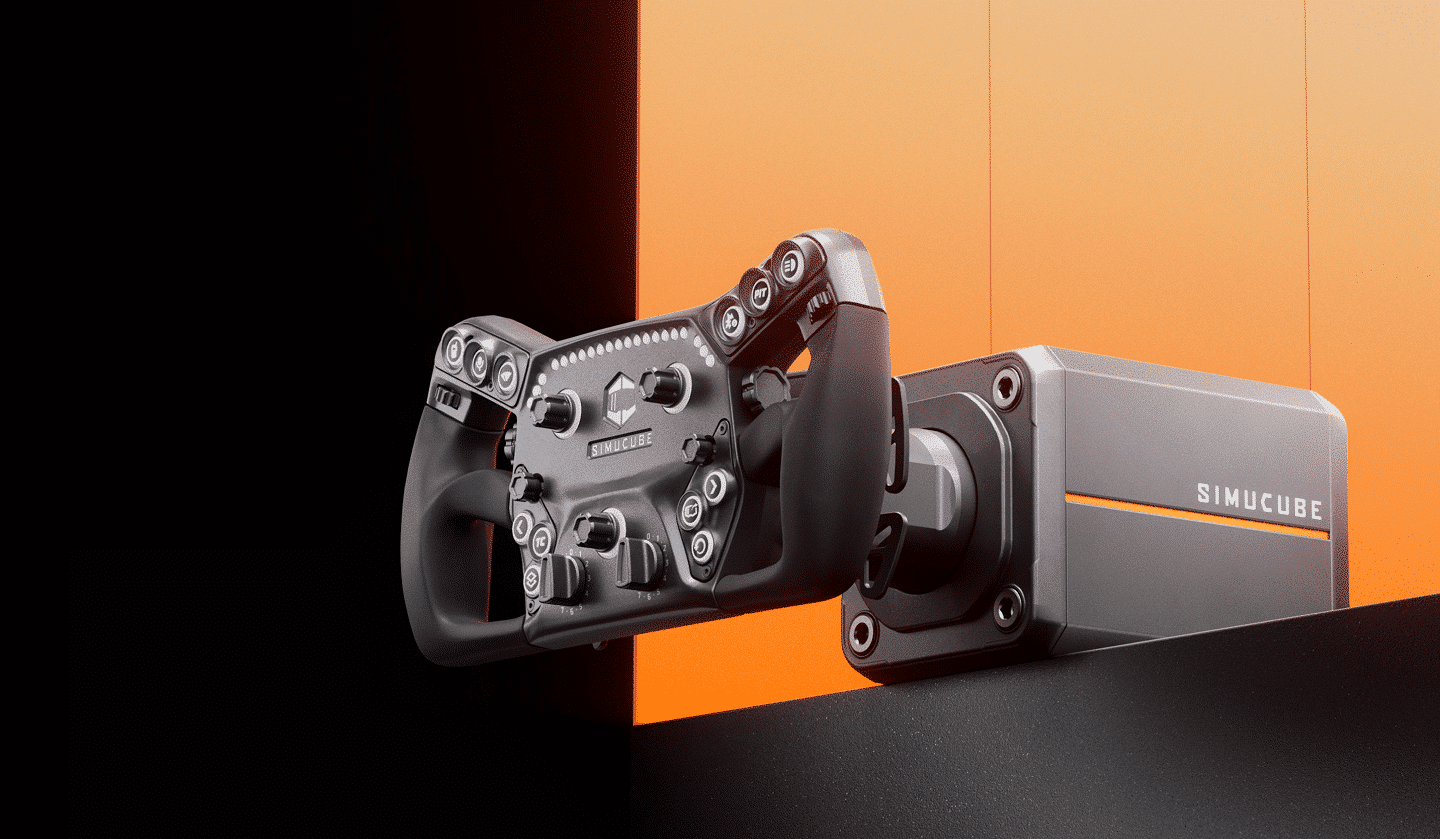
A New Motor Architecture: Spoke-Type IPM
The headline engineering change in the Simucube 3 Ultimate is its motor. While the Sport and Pro use refined versions of conventional motor designs, the Ultimate introduces what Simucube calls a "Spoke-type IPM" (Internal Permanent Magnet) motor. This architecture concentrates the magnetic field far more densely than a surface-mounted permanent magnet (SPM) design, which is the technology most direct drive wheel bases — including the Simucube 2 Ultimate — have relied on for years.
The practical result is a motor that delivers higher torque and faster transient response while drawing less power. That last point matters more than it might sound: lower power draw means less heat, which means the wheel base maintains consistent force output across long stints without thermal throttling. If you have ever felt a wheel base soften slightly after forty minutes of hard driving, you understand why thermal stability is not just a spec-sheet talking point.
Simucube compares the Spoke IPM design to the motor technology found in high-performance electric vehicles, where energy density and instantaneous torque delivery are critical. In a sim racing context, that translates to sharper road-surface detail, faster self-aligning torque response when the car rotates, and a more natural weight transfer feel through the rim.
Individual Calibration and Silent Operation
Every Simucube 3 Ultimate motor is laser-scanned on the production line. Its specific mechanical characteristics — minute variations in magnet placement, rotor balance, and winding geometry — are measured and loaded into a per-unit software model. The control loop then operates against that model rather than a generic reference, so each wheel base is calibrated to its own motor.
This individual calibration approach has a direct impact on two things drivers notice immediately: detail resolution and noise. Simucube claims the 3 Ultimate delivers "the sharpest detail" they have ever produced, and early hands-on reports from the Sport and Pro models suggest the third-generation control algorithm is noticeably quieter than the Simucube 2 series. For anyone running a simulator in a living space rather than a dedicated garage, near-silent operation at 35Nm is a meaningful quality-of-life improvement.
Simucube Link: A Platform, Not Just a Quick Release
The Simucube 3 generation introduces the Simucube Link ecosystem, and the Ultimate is built around it from the ground up. At the center is the Simucube Link Hub, a single connection point that ties together every Simucube Link-compatible device — wheel base, steering wheels, and Simucube ActivePedals — using a unified power and data bus.
The Quick Release itself uses a harmonic polygon locking mechanism designed for zero play under load. More interesting is LightBridge, Simucube's contactless power and data transfer system embedded in the QR. There are no electrical contacts to wear, corrode, or introduce resistance over time. Power and telemetry data pass through the release wirelessly, which means steering wheel buttons, displays, and shift paddles maintain a consistent, low-latency connection without the failure modes that pin-based connectors accumulate after thousands of hours of use.
For a turn-key simulator that needs to perform reliably for years, a wear-free connection between the wheel base and steering wheel is exactly the kind of engineering detail that separates professional-grade equipment from consumer hardware.
The Control Box: Centralized System Management
New to the Simucube 3 platform is the Control Box, which consolidates power delivery and system settings into a single unit. It powers both the wheel base and Simucube ActivePedals from one switch, and provides a physical interface for adjusting torque, damping, and force feedback profiles mid-session without tabbing out to software.
This is a subtle but important addition for drivers who want to fine-tune their setup during a practice session. Changing a damping value to match a different car or track surface without leaving the cockpit keeps you in the flow of driving and makes iterative tuning far more efficient.
What Changes From the Simucube 2 Ultimate
For drivers currently running a Simucube 2 Ultimate — or considering one — here is how the two flagships compare at a high level.
The Simucube 2 Ultimate uses a surface-mounted permanent magnet motor delivering 32Nm of peak torque. The Simucube 3 Ultimate's Spoke IPM motor pushes that to 35Nm while being more power-efficient. The practical gap is not just in peak torque numbers; it is in the speed and granularity of the force feedback signal. Reviewers who have driven the Simucube 3 Sport and Pro consistently describe the third-generation feel as "sharper" and more intuitive, with better separation between overlapping force feedback signals — curb strikes layered on top of tire slip, for example, rather than blurred together.
The move to Simucube Link and LightBridge also means the 3 Ultimate sits within an expandable ecosystem. As Simucube releases Link-compatible peripherals, the platform grows without requiring additional cabling or adapters. The Simucube 2 series relies on standard USB and power connections, which work fine but do not offer the same integration depth.
Mounting and Build Integration
The Simucube 3 introduces dual mounting options with built-in T-slots for both front and bottom mounting. This flexibility simplifies chassis integration, particularly on rigs like the ASR Pro Chassis where mounting geometry can vary depending on monitor placement and driver position.
At 35Nm, mounting rigidity is non-negotiable. Any flex between the wheel base and the chassis bleeds detail out of the force feedback signal and introduces a vague, disconnected feeling that defeats the purpose of running high-end direct drive. This is one of the reasons we build our simulators on professional-grade aluminum extrusion chassis from Advanced Sim Racing — the structural integrity matches the precision of the components bolted to it.
How the Simucube 3 Ultimate Fits Into a Rocky Sim Racing Build
Simucube has been a cornerstone of our highest-fidelity simulator configurations. The 35Nm Simucube 3 Ultimate slots naturally into Darkest Simulator territory, where every component is selected to push toward our 95% real-world fidelity target.
Paired with Simucube ActivePedals, a D-Box G5 motion platform with Traction Loss, and triple 45-inch OLED displays, the Simucube 3 Ultimate becomes the centerpiece of a force feedback chain that communicates everything happening at the tire contact patch — weight transfer, slip angle, surface changes, and mechanical grip transitions — with the kind of immediacy that lets drivers build genuine muscle memory.
Our 12-driver iRacing e-sports team will be among the first to validate the Simucube 3 Ultimate in competitive endurance conditions. The same drivers who took first place at the 2026 Sebring 12 Hours GTP and the 2026 Daytona 500 NASCAR events will be running long stints on the new hardware, building custom force feedback profiles that translate directly into the systems we deliver to customers.
The Bigger Picture: A Strong Month for Sim Racing
The Simucube 3 Ultimate is not the only story this month. iRacing's Season 3 2026 build is expected to drop in June, bringing a ground-up laser-scanned rebuild of Laguna Seca, BMW M Hybrid V8 Evo updates, and a brand-new NASCAR street course at Coronado. Meanwhile, Assetto Corsa EVO continues its Early Access march toward a full release, with v0.7 expected to add the Porsche 911 GT2 RS Clubsport Evo and further physics refinements.
For sim racers running premium hardware, new software content and platform improvements mean more opportunities to feel the difference that equipment like the Simucube 3 Ultimate provides. A rescanned Laguna Seca through the Corkscrew at 35Nm on a motion platform is going to be something special.
Ready to experience what 35Nm of next-generation force feedback feels like inside a fully integrated racing simulator? Book a free consultation with Rocky Sim Racing and let us build a system matched to your driving goals — from weekend track days to competitive endurance racing. Book a Consult
